Prior Authorization Is Not a Clinical Tool
by David Isei, MPH, MAOL, PMP, Executive Director, Hawaiʻi Healthcare Task Force
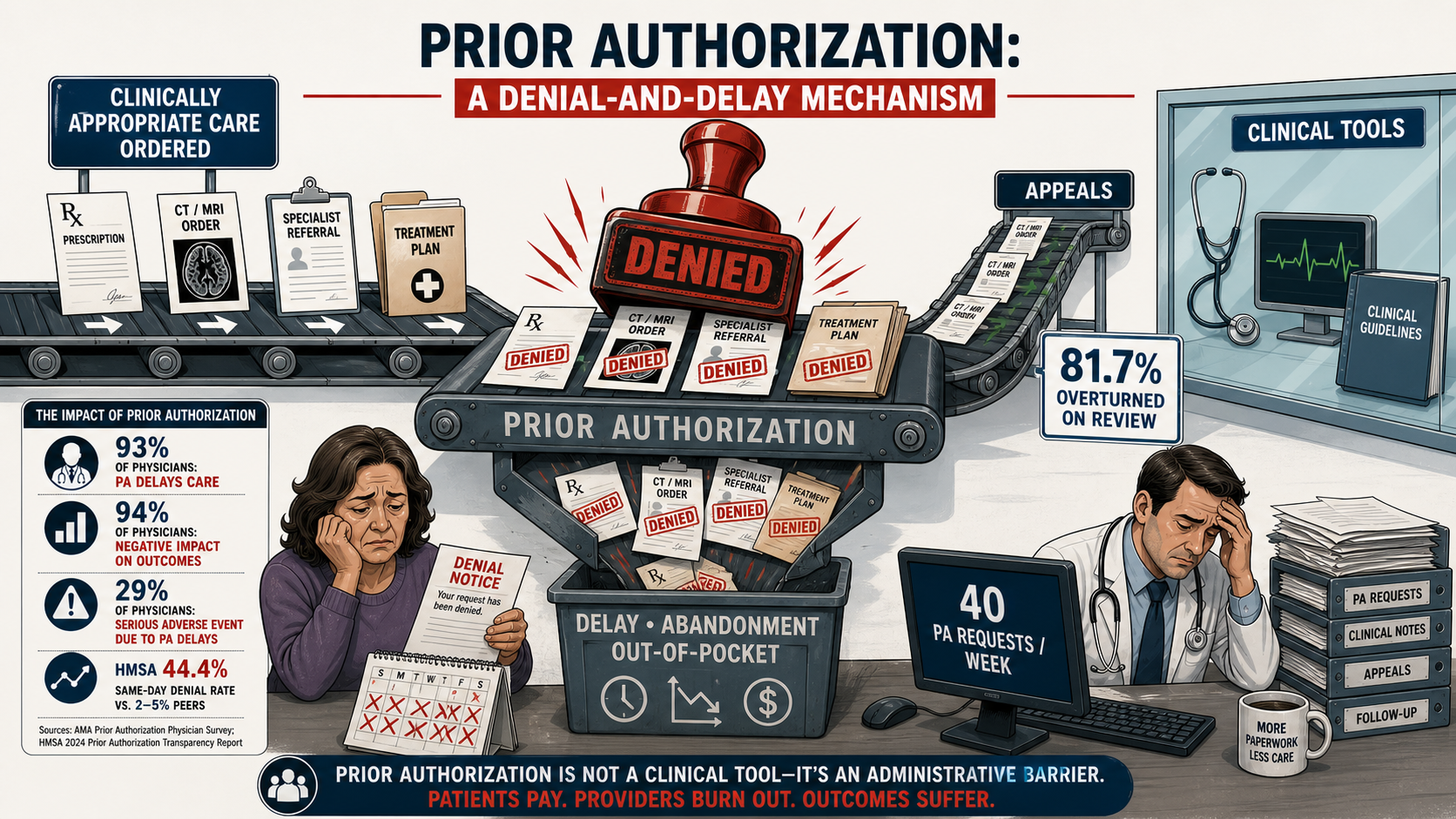
81.7% of denied prior authorization appeals that reach review get overturned.
More than four out of five patients who appeal prior authorization denials are successful. This high reversal rate indicates that many original denials lack justification.
This pattern does not reflect effective utilization management. Instead, it suggests a system focused on denials with an appeals process attached.
What the Numbers Actually Say
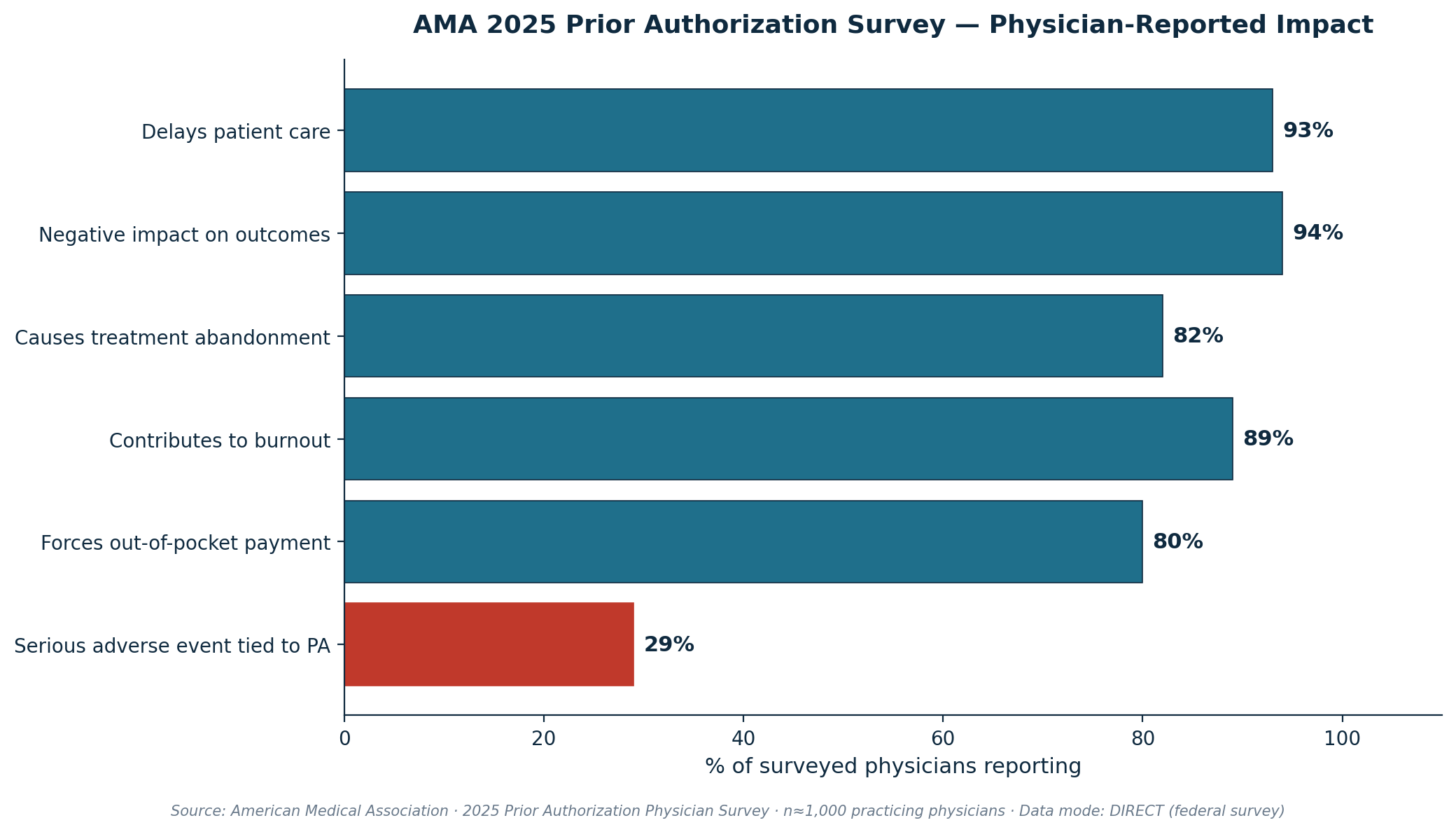
The American Medical Association surveyed physicians in 2025. 93% said prior authorization delays patient care. 94% said it has a negative impact on clinical outcomes. 29% reported a serious adverse event directly tied to a prior authorization delay. Among those: 23% led to patient hospitalization, 18% to a life-threatening situation, and 8% to permanent disability or death (AMA 2025 Prior Authorization Survey).
82% of physicians said prior authorization causes patients to abandon treatment entirely. 89% said it contributes to physician burnout. 80% said it forces patients to pay out of pocket for medications that should be covered.
The AMA also reported that the average physician manages 40 prior authorization requests per week. This administrative burden detracts from direct patient care.
Hawaiʻi Specific: HHIP Data
The Hawaiʻi Health Intelligence Platform tracks prior authorization denial rates by payer in real time. The 2026 year-to-date data for same-day denials reveals a pattern that appears to reflect payer policy.
HMSA: 44.4% same-day denial rate.
Kaiser: 2.0%. UHA: 5.0%. AlohaCare: 3.0%.
HMSA’s same-day denial rate is 22 times higher than its next-largest in-state competitor. HMSA covers 49.2% of Hawaiʻi’s commercial insurance market, meaning nearly half of commercially insured patients face denial rates that lack clinical justification.
If prior authorization decisions were based on clinical need, there would not be a 22-to-1 difference in denial rates among payers serving the same market and population under identical regulations.
The Medicare Advantage Confirmation
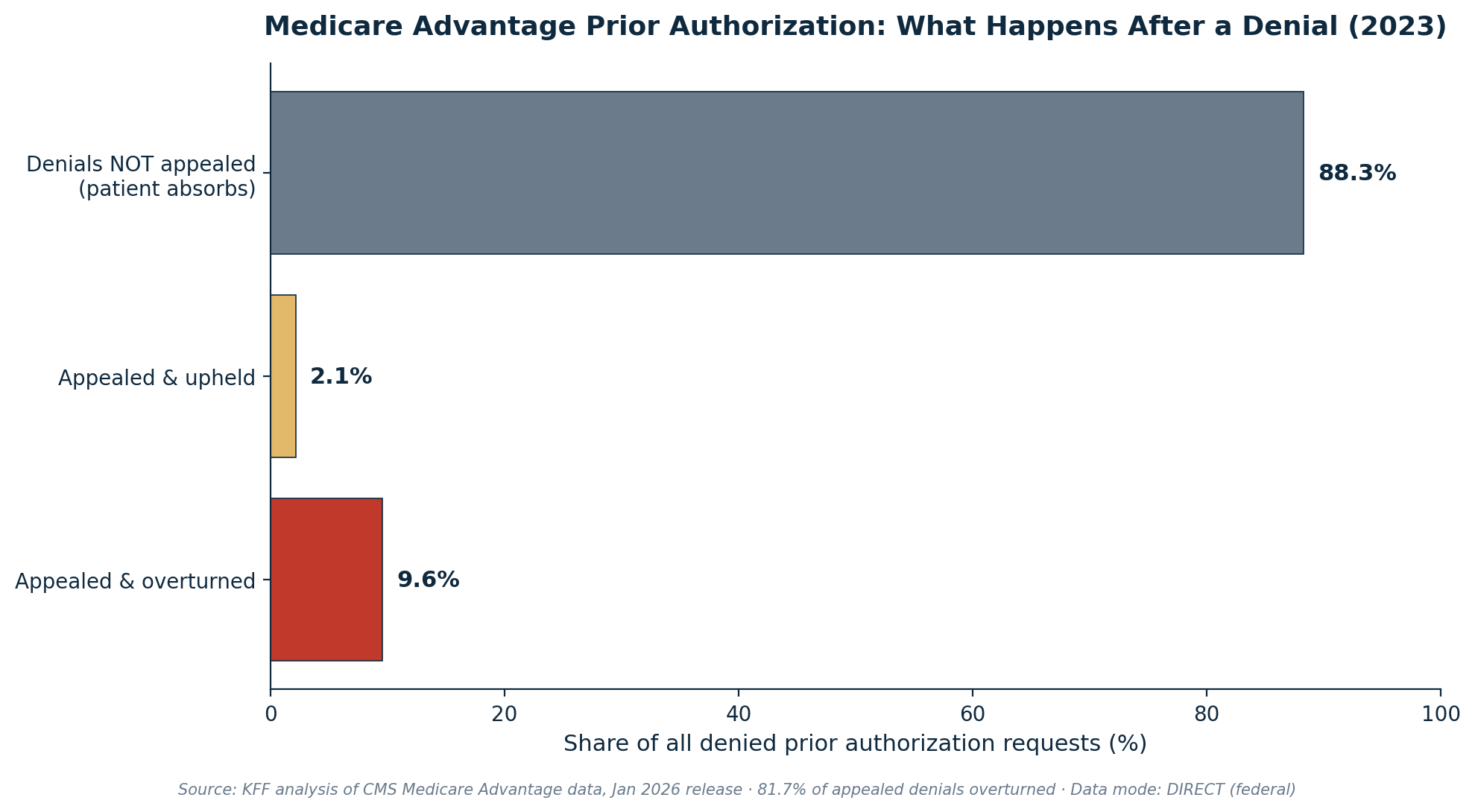
In 2023, Medicare Advantage plans processed more than 50 million prior authorization requests. Payers denied 3.2 million of them. Among the denials that patients appealed and won, 81.7% were overturned (KFF/CMS data, January 2026).
In the same year, the 115 largest Medicaid managed care organizations denied more than two million of 17 million prior authorization requests. Twelve plans had denial rates. These reversals are not minor technical corrections. The Office of Inspector General and CMS have documented that many prior authorization denials do not withstand initial clinical review. Most patients do not appeal; instead, they accept the denial, delay care, abandon treatment, or pay out of pocket, while the payer retains the premium. out of pocket. The payer keeps the premium.
The Logic of the Design
Prior authorization is publicly described as a tool to ensure appropriate care, prevent overutilization, and protect patients from unnecessary procedures. If this were accurate, denial rates would be consistent across payers and over time, and reversal rates would remain low, reflecting clinically justified decisions.
Neither is true.
The data indicates that the system creates barriers between patients and care. These barriers discourage some patients from seeking care, delay treatment for others, and require physicians to complete paperwork that does not contribute to clinical outcomes. This process shifts costs from insurers to patients and physicians.
This approach functions as cost management rather than clinically meaningful utilization management.
What Hawaiʻi Providers Are Absorbing
Physicians in Hawaiʻi handle 40 prior authorization requests per week, in a state already short 833 full-time equivalent physicians (JABSOM 2026 Physician Workforce Report). Neighboring-island physicians often serve as the sole providers in their specialties. For these providers, a denial frequently means the patient has no alternative options.
When a Molokaʻi patient’s prior authorization for a specialist visit on Oʻahu is denied, there are no alternative in-network specialists available on their island. The denial effectively results in an unaffordable travel expense or the patient not receiving the necessary service.
The burden of 40 prior authorization requests per week falls most heavily on small practices, solo practitioners, and providers on neighbor islands. These are the physicians Hawaiʻi is actively working to recruit and retain, yet they have the least administrative support to manage this workload.
The Reversal Rate Is the Confession
If 81.7% of appealed denials are overturned, the key question is not whether the denial process functions, but why it operates in its current form. Most people do not appeal. Most patients absorb a denial, and the insurer retains the premium without delivering the benefit. The appeals process is not a safety valve. It is a feature. It exists to provide legal cover for a denial rate that would otherwise be indefensible.
60 insurers nationally pledged to reform prior authorization processes by 2027 following engagement by the Trump administration and AMA advocacy (AMA 2026 update). Legislation requiring real-time electronic processing of PA decisions is advancing at the federal level. Hawaiʻi has the data to make this a state-level priority as well.
The HHIP data showing HMSA at a 44.4% same-day denial rate is a factual finding. The next step is for regulators and legislators to determine how to respond.
The data no longer supports the clinical justification for prior authorization. Physicians do not endorse it, and patients bear the cost. The high reversal rate highlights the true function of this process.