Kauaʻi, PMRF, and the Road Ahead
by OHA Trustee Keli‘i Akina PhD, KWO, June 1, 2026
Last month, I had the opportunity to visit the Pacific Missile Range Facility (PMRF) during the OHA trustees’ annual meetings on Kauaʻi. For many in Hawaiʻi, PMRF is a familiar name, yet few fully understand what the facility is, the role it serves, and why conversations surrounding its future are becoming increasingly important for our state.
Located on Kauaʻi’s west side near Barking Sands, PMRF is different from most military facilities in Hawaiʻi. It is not a large troop base or harbor operation. Instead, PMRF is a specialized testing and tracking facility used for missile defense and other military research in the Pacific.
Often described as the world’s largest instrumented multi-environment range, PMRF occupies a unique position within America’s defense infrastructure. Hawaiʻi’s geographic isolation and expansive access to the Pacific Ocean make the facility especially valuable for testing and tracking capabilities that cannot easily be replicated elsewhere.
PMRF is approaching a major turning point. Current leases and easements covering more than 8,000 acres on Kauaʻi are set to expire between 2027 and 2030, and federal agencies are seeking long-term extensions. Public discussions are already underway. Last year, a draft environmental impact statement was released, followed by meetings on Kauaʻi where residents shared differing views about the facility’s future.
Supporters of PMRF point to its role in national security and its importance to Kauaʻi’s economy. The facility is one of the island’s largest employers and provides jobs for many local residents. For some, it also helps diversify Kauaʻi’s economy beyond tourism.
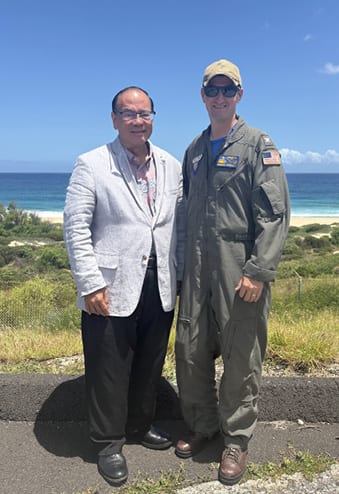
Trustee Akina and Commanding Officer of the Pacific Missile Range Facility, Capt. Robert A. Prince. – Courtesy Photo
At the same time, the lease discussions have renewed broader conversations about military land use in Hawaiʻi. Some community members and Native Hawaiian organizations have raised concerns about environmental impacts, water use, cultural access, and the future of public trust lands. Others have stressed that Native Hawaiian communities must have a meaningful role in decisions involving these lands.
What makes PMRF different from many other military land issues in Hawaiʻi is that the debate is less about live-fire training and more about land use, stewardship, access, and the relationship between Hawaiʻi and the federal government. Much of the land tied to PMRF serves as buffer space and support infrastructure rather than active testing areas.
Still, decisions about the facility’s future carry broader implications for Kauaʻi and Hawaiʻi, touching on economic opportunity, cultural stewardship, and the state’s role in an increasingly important Pacific region. In the coming years, state leaders, federal agencies, Native Hawaiian organizations, and local communities will all help shape those decisions. I particularly look forward to how OHA will perform its unique constitutional role in this matter.
Regardless of where one stands on these issues, Native Hawaiians and all Hawaiʻi residents deserve a clear understanding of what PMRF is, why it matters, and why these upcoming decisions will have lasting implications for Kauaʻi and our state as a whole.